Whether he wants to work, arrogance and doubt, and acknowledging others
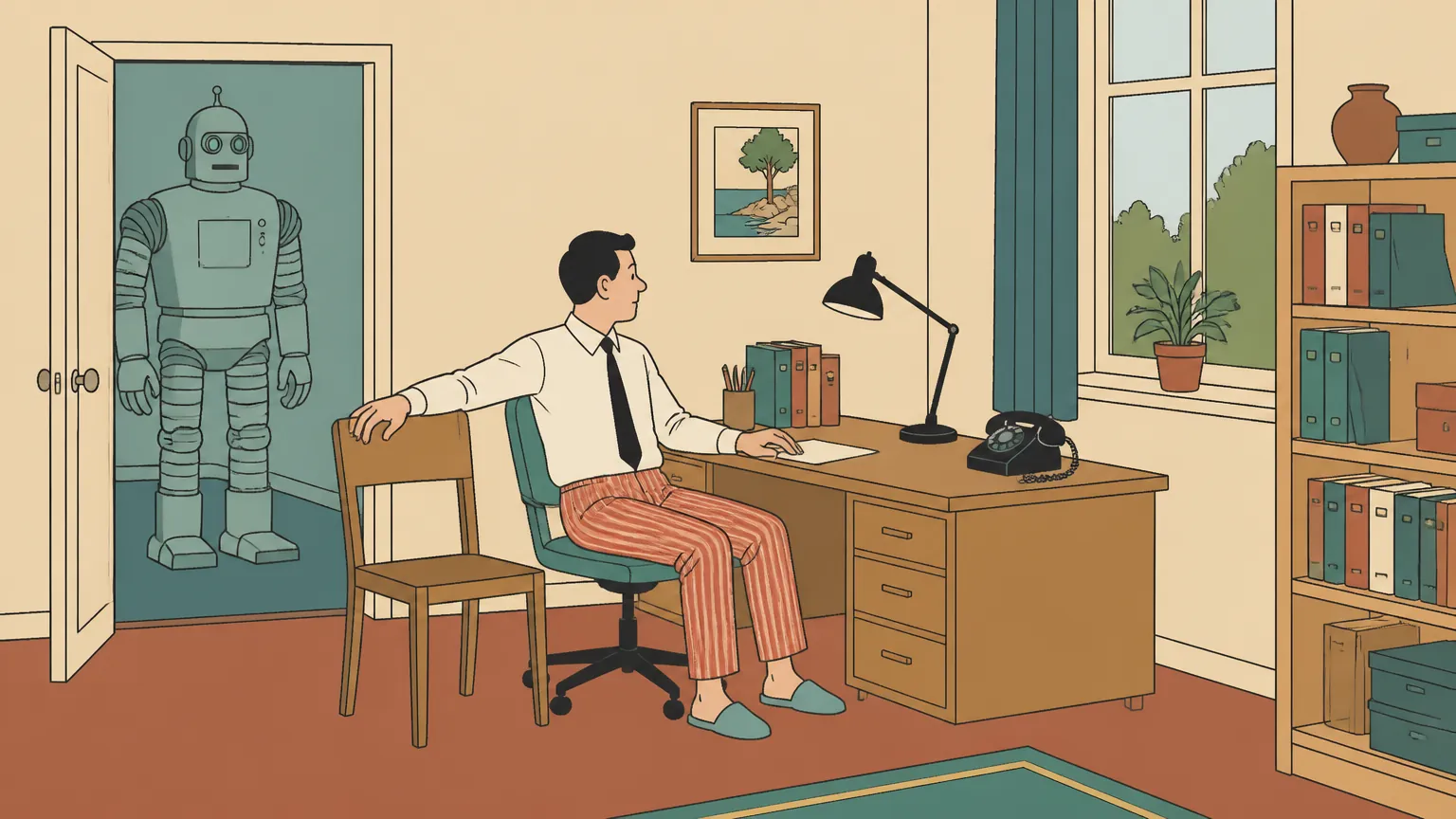
Frederic keeps sitting with the question of whether he really wants to work, concluding he does not.
The Wonders point out that in the past he has presented a body in the work environment, done what he felt like doing and been paid for it, which they would not call work but an impingement on his free time - and that now that he has a family he feels that impingement more, though at bottom it is his ego asking whether it really wants to get up and get dressed.
Frederic notes remote working at least spares him getting dressed.
He then says he has become somewhat less arrogant over the years but has more doubts than before.
The Wonders disagree: he has fewer doubts, but previously his arrogance kept him from acknowledging them, while now he acknowledges and handles them far more easily.
As a human personality he has become more self-aware, less self-centered and more caring than when he was arrogant.
Frederic admits a moment of fearing that although he has managed to avoid really working in the past, he may not be able to in future.
The Wonders reply that of course he can, and that his doubt is not 'can I' but 'do I want to' - the key question is whether he chooses to, and he should give himself permission to change that choice moment by moment, deciding on any given day simply not to bother, which is a willingness to choose rather than arrogance.
They add that a part of him wants to be fully acknowledged, and that the shift under way in his ego, personality and mind is bringing him to realize that in order to be acknowledged he must acknowledge others - a kind of respect that neither minimizes others nor takes unnecessary advantage of them, though some people plead to be taken advantage of.
Respect, acknowledgement and allowance of others, they say, is respect, acknowledgement and allowance of himself; the fourth defining statement is manifesting more strongly in him.