What 'encountering the Divine' means: essence beyond ego, energy without definition, and observing movement
Frederic asks what the Wonders meant when they spoke of encountering the Divine.
They define it as coming to full awareness of his own spiritual essence: he is a spiritual being, but at this stage it is a mental concept he holds as a nice idea rather than something realized physically, mentally, emotionally and spiritually.
When it is realized, his whole life changes - what he worries about he will no longer worry about, what he thinks about he will no longer think about, and he will explore from the perspective of experiencing rather than figuring out.
Frederic describes having come full circle: he began with spirituality as something outside himself, assumed to be bigger and better, grew tired of that and returned to being human, and now appreciates even the parts of himself he would once have judged as unspiritual, which has changed how he sees other people.
He adds that he no longer cares much about questions about the future, and realizes many past questions were ones he already knew the answers to but wanted reassurance or validation for.
He also reports letting more emotions run through him before judging them.
The Wonders ask whether he sees himself as only a human being, more than one, or less than one, and then whether he sees himself as Frederic - which means seeing himself as an ego, an 'I am, I exist'.
That is fine humanly, but his essence is not defined by or related to his ego; the ego is necessary to function in third-dimensional reality.
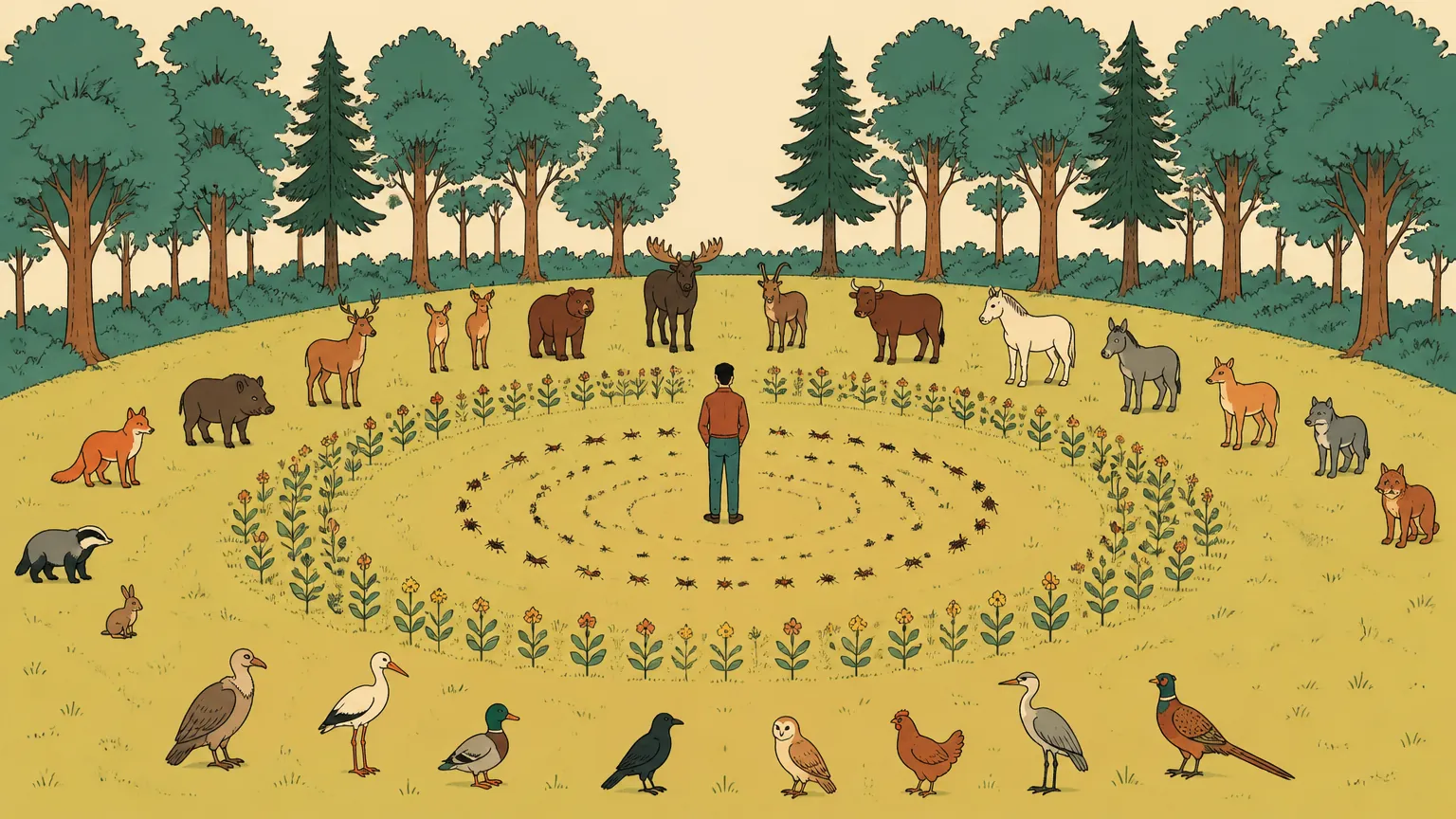
They direct him to look beyond himself at everything that exists - the planet, animals, trees, plants, insects - and then further into 'energy without definition', meaning movement not confined to any defined form or to his house, city, country or planet, extending into solar and universal systems.
Science, they say, is at the beginning of understanding a far greater movement.
Exploring this leads to discovering that as an essence, an incarnated human being and an ego he is a small drop in a vast ocean of movement, yet so integral to it that without him the movement would not be the same.
There are limitless questions to explore, approached not to understand but to experience, which requires cultivating a quietude within daily activity - even at work - that puts him in touch with the movement and lets him observe it without judgment, so the movement is both his and not his and he is simply part of all things.
Encountering that is what some call divinity: something without ego but with awareness of its own existence, of which he is a part.
Realizing it, not as a mental construct, lets him see in the people around him a need to constrain the movement out of fear of losing control and of not surviving; his own application of choice within the movement can soften that need so awareness grows.
At that point he becomes part of the creation and realizes that his ego personality - body, mind, emotions, soul - is an imaginary representation used to express himself at this point in time and space, that he is simultaneously expressed in many other ways, and that his choices affect the movement of all existence, which ultimately is about play.